

Commentary by: Richard Pollock
Thursday, October 1, 2026
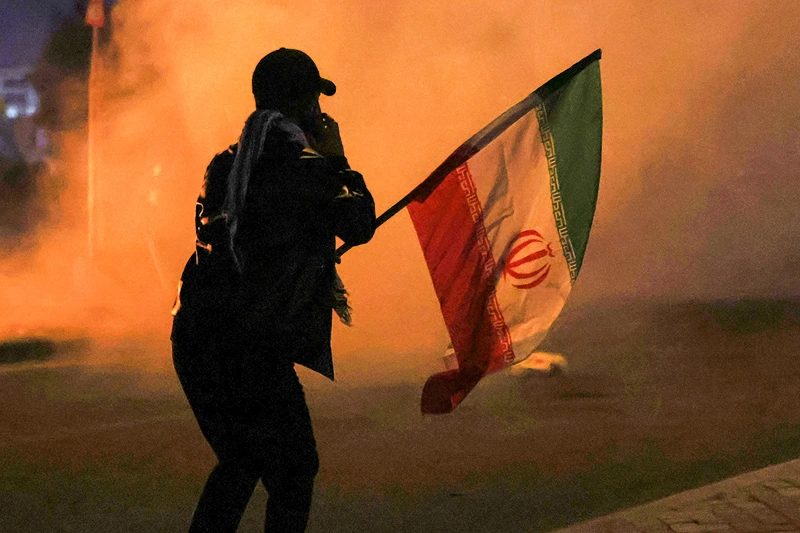
For six full hours yesterday, I watched “This Is Our Story – Voices From Iran’s January Protests,” a deeply moving documentary based on powerful, first-person videos taken in real-time inside Iran from December 28, 2025, to mid-January 2026.
That’s when anti-government demonstrations rocked the Islamic Republic. It’s also when Iran’s Mullahs murdered in cold blood more than 40,000 peaceful protesters over a two-day period, from January 8 to 9.
This film was produced by compiling real-time amateur videos taken by local Iranians. The videographers recaptured a piece of dark history that has been lost in the West even though it occurred only nine months ago. The Western media acts as if it never happened. Its wretched story has virtually disappeared.
As we approach the October 7 anniversary, I think it’s important to view another video production that documents the savage Islamic murders of unarmed civilians. In the West, we need to understand what happened on the ground inside Iran earlier this year and its implications for the future of Iran – and of course, for the region.
This new documentary was released on September 26. The four episodes were made available for free, streaming on the Manoto You Tube Channel. Manoto is an international Persian language general entertainment channel founded in 2010 by a London-based Iranian couple. This Is Our Story is in Persian with English subtitles.
This isn’t like “NAZA,” the anti-Israel documentary that was produced in secret and fully relied on anonymous sources. In contrast, “This Is Our Story” is told first-hand by actual participants in the Iranian uprising. It also provides vivid documentation of the unspeakable atrocities committed by the Ayatollah’s regime over the two-day period.
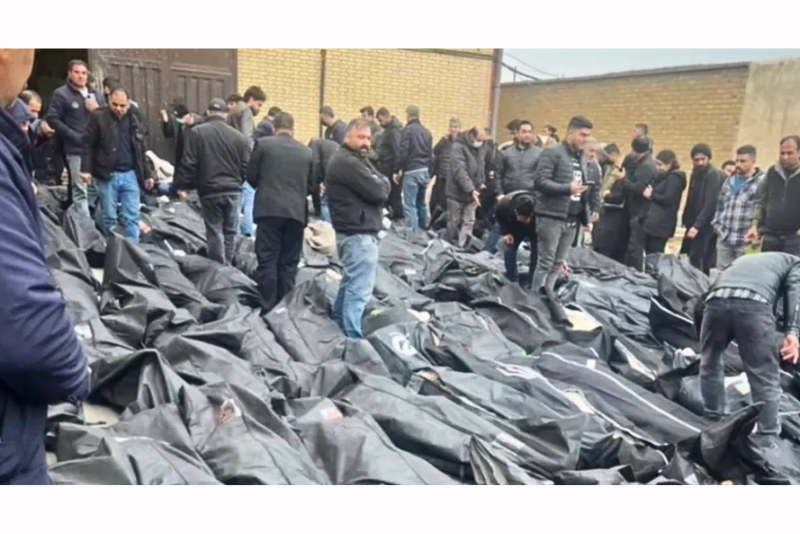
Grieving families Search for Loved Ones in Body Bags, January 14, 2026, outside the Tehran Province Forensic Diagnostic and Laboratory Center in Kahrizak
Inside Iran, nationwide protests over economic conditions began on December 28 and escalated on January 8 and 9. Then the movement began calling for freedom and democracy. According to the UN, protests erupted in all 31 provinces and in more than 200 cities inside Iran.
It’s estimated that in the capital city of Tehran, more than 1.5 million demonstrated and more than five million took to the streets throughout the rest of the country.
At its most gripping, “This Is Our Story” shows the deep emotional toll on a nation’s people when thousands of body bags were placed in local hospitals and mortuaries. Families had to painstakingly open each bag to find a husband, wife or child. It also shows the many funerals that became lightning rods for further dissent.
Since the funerals, silence. But as the documentary shows, internally, Iran is a powder keg ready to explode.
My own impression is that the mass killings, while it succeeded in stopping the demonstrations in their tracks, it may also have planted the seeds for an ultimate end to the Khamenei regime. You do not generate this kind of widespread and deep national grief and continue to govern – even with a ruthless army and paramilitary force.
As the video shows, the original crisis materialized on December 28, 2025. Merchants at Tehran’s Grand Bazaar triggered a massive strike which quickly spread to other bazaars around the country. Both bazaar owners and consumers were suffering from the country’s runaway inflation.
In December 2025, the Iranian economy was approaching peril. The Rial, its currency, had collapsed and inflation roared at 50%. People found it next to impossible to buy food and other staples for their families. The inflation rate in September, 2026 was 89%, according to the Statistical Center of Iran.
On January 3, the fifth day of the strike, peaceful demonstrations began to build across the country. This time, protesters widened their calls, demanding freedom and democracy.
Alarmed by the size of the demonstrations, on January 4, the government declared martial law in a variety of provinces. In Ilam Province, police stormed the demonstrators and seized the wounded and the bodies of those killed. This turned out to be an omen of what was to come.
On January 5, the bazaar national strike continued. All shops were closed in many parts of the country.
But there was rising trouble. In Najafabad, parents arrived at a police station, seeking their children who had been arrested. Demonstrators began to chant, “The children of government officials are in Canada while our children are in prison.”
On January 6, the first accounts of live gunfire shootings by government forces were reported. On January 7, the government sent military units into Tehran, Rasht, Qom, Bojnard, Boroujerd, Bandas and Abbas as well as other cities.
But the demonstrations were getting larger and not only in the big cities. In small Abdanan, a rural capital city in Western Iran, 10,000 demonstrators hit the streets.
On January 8, Iranian citizens answered a call by the Shah’s eldest son, Reza Pahlavi. He urged widespread demonstrations against the Mullahs.
The demonstrators shout to their fellow demonstrators, “Don’t Be Afraid.” They also said to the police, “Don’t Shoot…Shame on You.” Other demonstrators tried to buck themselves up, chanting, “I’m not afraid. I’m not afraid.”
That night millions pour into the streets throughout Iran. Videos show tens of thousands quietly walking in many cities. “Look at the crowd,” a demonstrator says on his cell phone. “They keep pouring into the streets.”
“Join us. They can’t stop us,” protesters exclaim. Huge crowds are seen in many cities throughout the country.
At first, the security forces lob tear gas into the crowds. But then the hated Basij paramilitary militia began firing into the crowds in Tehran. Beatings of protesters occur. Still, the protesters appear strong. Chants of “Freedom, freedom, freedom” echoed through the streets.
The video captures the nightmare that’s about to unfold. In Tehranpars inside the capital city, government forces begin to use live ammunition. The gunfire is rapid. “They’re firing everywhere. “There’s blood everywhere,” one protester screams.
In a video from Haft Hoz Square in Tehran Province more gunfire is heard. Protesters fall to the ground. “This is the blood of our people,” a young man screams. “Haft Hoz has turned into a battlefield,” another man yells.
“They’re firing live ammunition from the rooftop” a bystander from an apartment say. “Yeah, shameless bastards,” his friend spits out. The shooters hide in the rooftops. “Come outside, bastards,” one protester shouts.
Various videos capture extremely rapid gunfire, hundreds of rounds per minute. “In Isfahan, they’re using heavy machine guns against the people,” a demonstrator shouts above the din of the guns.
In cities across Iran, blood can be seen everywhere. On the road, sidewalks, against doors and walls. Most cities resemble war zones. There are fires burning, hulks of burned-out cars and buses, bodies and debris filling the roads.
In Mashad, a protester exclaims, “It’s a war zone.” Thousands of demonstrators are fleeing. Rapid gunfire is heard throughout the city. “Khamenei’s coming, armed to the teeth against defenseless people,” exclaims one demonstrator.
Here, hundreds of people are taking cover at a highway railing. People are shot and bleeding all along the roadway. One man is shot in the forehead, bleeding profusely from the head. Someone tries to save him. “He’s dead,” another person says.
In Saveh, security forces shoot point-blank at the protesters. “You, shameless piece of shit,” one protester yells. “You spineless bastard,” shouts a woman. “Stand with the people,” she screams.
In Amol, uniformed soldiers in camouflage shoot at the civilians. A police officer at point-blank range guns down two protesters. In Aryashahr District, screams are heard from a woman as rapid fire hits students. “They keep firing and killing people,” a man is heard to say.
People are dying everywhere. A man is seen on his back, blood flowing from his mouth. In another video, people are unconscious on the ground.
“Help me,” a man shouts. “My wife has been shot. They’ve killed my wife.” A child nearby asks, “Mum, Mum, where are you?”
In Shiraz, hundreds of troops fire as they walk towards the demonstrators. “This is evidence of a crime,” someone screams.
In Kermanshah, gunshots are heard throughout the city. The Basij and the Islamic Revolutionary Guard Corps moves rapidly throughout the city. Despite the terror, a student repeats a slogan adopted by the students: “Don’t be afraid. We are all united.”
In Salsabil District, demonstrators moan. A person says, “They killed so many people. They shot everyone. This is the front line.”
There are difficult moments throughout the film. In Najaf Abad, a student observes that “they’re loading the bodies of those they have killed onto a pickup truck. Film this, film this,” he implores.
The hospitals — and eventually mortuaries — fill up with the dead. Wounded and dying patients are on the hospital floors as there aren’t enough beds.
Video footage shows that hospitals are so overwhelmed that bodies are on the ground everywhere, even in a carpark outside. The enormity of the slaughter is becoming clear to everyone. Wails and screams fill the air.
Throughout the country on the night of January 8, chaos, blood and fear engulfed the demonstrators. Many fled the killers, but others ran towards the wounded. Hastily organized rescuers spontaneously braved the wild shooting by regime troops to aid men and women gunned down.
“There’s blood everywhere,” wails a person. “Our people’s blood.”
“This is the price we pay,” answers another woman.
Those who are captured by the security forces face terror. One video captures a woman thrown to the ground. A military man stands over her and begins beating her with a baton. He kicks her in the face. He picks her up and tries to drag her away, but she tries to resist, grabbing the trunk of a nearby tree. The man brutally hits her in the head. Other camouflaged troops arrive, pick her up and drag her away. Her fate is unknown, and she is terrified.
In Ahaz, a woman is looking down at the violence on the street as troops on rooftops take aim at the demonstrators. “I wish I had a gun,” she says. It’s a thought I can relate to.
The troops have another idea of how to kill more protesters. Many protesters have taken refuge in bazaar storefronts. The soldiers begin to burn down the stores. An eyewitness explains: “They surround the bazaar, set it on fire so the protesters would get trapped, or be forced to run out, given them a chance to shoot them. And they prevented the firefighters from putting out the fires for two hours.”
Most cities resemble war zones. There are fires burning, hulks of burned-out cars and buses, bodies and debris filling the roads.
On the streets, blood is everywhere. Anger is brewing among the families and among the protesters. A group tries to overturn an ambulance. Other government vehicles are burned.
But on the morning of January 9, the authorities are nowhere to be seen. They have fled.
Meanwhile, the morgues are quickly filling up. Families descend on them. Thousands of protesters by now are seen in body bags. Some faces appear peaceful, but many display pain with grimaced expressions. One dead man has a tear dripping from his eye. Women are next to each other, shoulder to shoulder. They are mainly young, very young.
In Kahrizak Medical Center and Mortuary, dead bodies are crammed next to each other. It appears that there’s thousands on the floor. “The bodies go on and on,” says a man who is filming the dead.
Despite the slaughter, on the night of January 9 protesters amazingly decide to return to the streets. This time the crowds are decidedly bigger, many times larger than the night before.
And the anger is rising. “Khamanei, you tyrant. We’ll send you to your grave,” a woman shouts from a window. “This is your blood.”
Neighborhoods throughout Iran are filling with defiant demonstrators despite the slaughter of the previous night. “Until the mullahs are buried, we will not be free,” they chant in Isfahan.
The crowds are huge. But as the night progresses, the regime’s troops move in again.
The video shows war scenes in Ahvaz, Andarzgood, Tehran, Ponak, Mashhad, and Gohardasht. Troops are mowing down demonstrators. In Isfahan, a protester says, “It’s a full-scale war.”
On January 10, and in the days that follow, tens of thousands of bodies arrive at hospitals and mortuaries. Families are devastated. Many are hysterical. It is sheer pandemonium. A mother is holding her son; a husband is holding his wife. There is deep collective pain in all of the hospitals and mortuaries.
Eventually, large tractor trailers bring the bodies to central locations. Huge crowds patiently wait behind the trucks. Many family members are in disbelief. “Wake up and tell me this isn’t true,” she says to her dead son. There is deep, collective grief.
A large man sobs as he holds his child. There is an indescribable scene of disbelief, emotional pain and anger.
We’re told women are stacked one upon the other. It sounds like images from Nazi concentration camps.
Funerals across Iran become places where anger and calls for resistance begin to emanate. As many of the videos show, eulogies become places where anger against the government can be safely expressed. The Iranian troops are nowhere to be seen at the funerals. Thousands flood into the cemeteries. Their anger and pain are everywhere.
The funerals become rally points for many of the mourners. An old woman at one funeral with thousands in attendance tells them, “I have one request for you all: please keep what he stood for alive.” She is met with thunderous applause.
The video makes clear that the anger of the people against the Islamic regime is very deep. The mass killings have touched a raw nerve among many Iranians. There are feelings of distrust and deep hate for this regime.
A month after the slaughter, Iran International, a dissident news organization wrote, “Iran’s January massacre of protesters has left scars far beyond the streets. In cemeteries and hometowns, families are transforming centuries-old mourning rites into defiant celebrations of lives cut short.”
The bulk of Iranian citizens probably were happy when Supreme Leader Ali Khamenei was killed six weeks after the public slaughter at the beginning of Operation Epic Fury. At the time, CBS News reported, “People were cheering in the streets of Tehran, according to a CBS News producer in Tehran.”
The anger that’s displayed in “This Is Our Story” will not dissipate quickly. You have to believe the millions that demonstrated on January 8 and 9 are waiting. Waiting for the day when they can once again rise up against the hated Mullahs.
The West’s response has been pathetic. On January 13, UN High Commissioner for Human Rights said he was “horrified” by the violence against protesters. On January 15, the UN Security Council expressed “deep alarm.” But little else was done.
And finally last week – nine months after the slaughter – the Human Rights Council quietly confirmed what was patently obvious: there was widespread murder of peaceful protesters. The HRC concluded their acts constituted “crimes against humanity.” That, of course hasn’t filled many headlines in the West.
They also now confirm that tens of thousands of Iranian protesters – including children – were arrested and are languishing in prisons. They reported that there has been “torture and ill treatment” of prisoners, prolonged solitary confinement and lengthy and abusive interrogations.
“More than 70 people, including women and juveniles, remained at imminent risk of being sentenced to death or executed in relation to the protests,” they report. Thirty-three have been executed and 100 now sit on death row.
But in launching their reign of terror, the Mullahs also may have planted the seeds of their own demise.
That, at least, is my hope after seeing and feeling the pain, anger and desperation of the Iranian people in “This Is Our Story – Voices From Iran’s January Protest.”
(Views expressed by guest commentators may not reflect the views of OAN or its affiliates.)
Richard Pollock is a former New Left activist and was a roommate with Chicago 7 defendant Rennie Davis. He understands New Left strategy and tactics. For four decades, Richard was an investigative reporter based in Washington, D.C. Among his positions, he served as the senior investigative reporter for the Washington Examiner, the Daily Caller News Foundation, and at OAN. While at OAN he served in the Washington, D.C. bureau and hosted its investigative reporting specials. He is semi-retired and his posts from D.C. can be read on Substack.com
What do YOU think? Click here to jump to the comments!
Sponsored Content Below