

Commentary by: Steven Palazzo
Tuesday, June 9, 2026
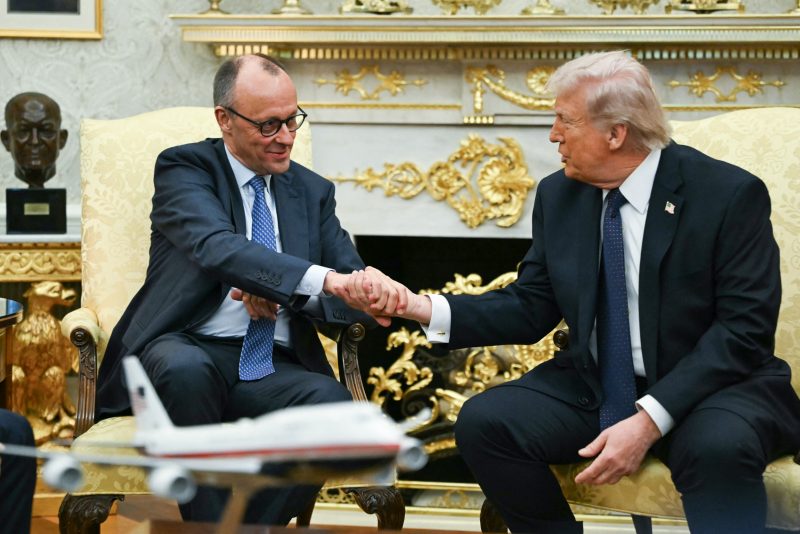
German Prime Minister Friedrich Merz just took a major swipe at the United States.
“I wouldn’t recommend that my children go to the U.S. today, get their education there, and work there, simply because a social climate has suddenly developed there,” Merz said, adding, “Today, the best-educated people in America have great difficulty finding a job.”
Setting aside Merz’s fuzzy math—America and Germany have nearly identical unemployment rates while the U.S. offers much higher salaries and lower taxes—an American might read his remarks and think: that’s rich.
Germany today is a major free-rider off the United States. It benefits from U.S. innovation, makes extensive use of U.S. technology, participates in U.S.-funded global institutions, imports U.S. fossil fuels, and, of course, relies on the U.S. for much of its national defense.
If Merz’s comments are any clue, the Germans aren’t exactly bursting with gratitude. Thankfully, President Donald Trump is working to end this reliance and make sure the U.S.-German relationship becomes more balanced.
Trump has done this most visibly with national defense where Germany’s free riding is also most plain to see. This has been a problem for decades: presidents going back to Barack Obama have complained that European nations rely on American security guarantees for protection while chronically underinvesting in their own militaries.
The United States spends about 3.4 percent of its GDP on its military and other defense-related expenditures. Germany only spent about 2.3 percent in 2025, and this was the first time it had cleared NATO’s recommended 2 percent threshold in 35 years. The result is that, eight decades after World War II ended, some 38,000 U.S. troops are still deployed on German soil.
Why should the United States, with its growing national debt, subsidize the defense of the third wealthiest nation on earth?
Hence why President Trump is putting plans into motion that will withdraw almost 5,000 troops from German soil, with more redeployments possibly on the way.
Even on Ukraine, where Germany has unquestionably been a leader, the United States has still spent almost five times as much on military aid despite being in a different hemisphere. It’s time for Merz’s Germany to take responsibility for its own defense in its own global neighborhood.
The same free-riding dynamic holds true with prescription drugs. At a time when the German population is rapidly aging, Germany is actually cutting healthcare spending while slapping more price controls on American pharmaceuticals.
The result is that Americans pay two to three times the amount that Germans do for the same drugs, despite having innovated and developed those drugs themselves. A headline at Forbes summed it up best: “Germany Wants Cheaper Drugs—and Americans to Pay the Difference.”
So it was heartening when U.S. Trade Representative Jamieson Greer and other Trump administration officials recently pressed this case to the German ambassador over breakfast. The Americans warned that Berlin could face more tariffs over its “unfair” price caps on imported pharmaceuticals.
The Americans have more than a leg to stand on here, having recently struck a deal with the British government that will see the UK’s National Health Service pay 25 percent more for new medicines developed in America.
Given that more than half of new medicines over the last decade were developed by Americans, why should the UK or Germany get them at below-market rates? Given that inflation is taking a painful bite out of Americans’ wallets, why should they have to pay significantly more at the pharmacy?
Despite their freeloading, Trump’s aim is not to single out the Europeans. The president has a grander vision in mind: he wants a global free market on prescription drugs where hard-working companies and scientists can receive pay commensurate with their labor while patients can get access to the products they need.
That means everyone, including the Germans, should be able to benefit from prescription drug innovation. But it also means countries like Germany can’t shortchange the United States by monkeying around with price caps on American-made goods.
This vision is consistent across Trump’s other policy decisions. His tariffs, for example, are meant to make sure Americans receive their fair share while knocking down unfair trade barriers and creating a more frictionless marketplace.
As for Friedrich Merz, even an American can understand why Trump’s fairness agenda might stress him out. But there’s good news: he can always relax with a family vacation to Florida or the Grand Canyon.
(Views expressed by guest commentators may not reflect the views of OAN or its affiliates.)
Steven Palazzo is a former Republican member of Congress from Mississippi.
What do YOU think? Click here to jump to the comments!
Sponsored Content Below